

As in today’s world we have seen that due to explosion of social media and internet, access of knowledge is very easy. But this has again created a problem in the spiritual sphere where people tend to misinterpret the teachings of great saints based on their own biases. Regarding this problem, we will try to understand the real meaning of a popular verse of Padma Purāṇa, cited by Great Gauḍīya Vaiṣṇava Āchārya Śrīpād Baladeva Vidyābhuśaṇa, in his work Śrī Prameya Ratnāvali.
Introduction to the text
Śrī Prameya Ratnāvali is a text of Gauḍīya Philosophy which was composed by Śrīpād Baladeva Vidyābhuśaṇa between 1758 AD – 1768 AD on the request of his disciples to explain the objects of knowledge as discussed in Śrī Govind Bhasya. The basis of the text is a verse that is passed down in Tattvavāda sect [1]. The authorship of the verse is unknown but the earliest commentary on that verse is by Śrīpādarāja, a Madhwa Yati. The text discusses multiple aspects of Gauḍīya philosophy quoting extensively from Upaniṣads, Śrīmad Bhāgavatam, etc. This text also establishes a connection between Gauḍīya sampradāya and Tattvavāda tradition.
Objective of the article
The primary objective of this article is to explore two verses quoted by the Śrī Baladeva from Padma Purāṇa which are-
sampradāya-vihīnā ye mantrās te viphalā matāḥ
ataḥ kalau bhaviṣyanti catvāraḥ sampradāyinah
śrī-brahma-rudra-sanakā vaiṣṇavāḥ kṣiti-pāvanāḥ
catvāras te kalau bhāvyā hy utkale purusottamāt
We will discuss two primary arguments raised by objectors regarding these particular verses that are as follows –
- The author has wrongly attributed these verses to Padma Purāṇa as it is not found in any of the present editions and maybe it is a creation of the author itself.
- This verse is wrong because it only allows four sampradāyas and hence it is against those lineages of Vaiṣṇavas who don’t ascribe to these four sampradāyas.
Dissecting the arguments
First Argument
Let us take up the first argument of the objector in which he claims that because this verse is not found in the current versions of Padma Purāṇa and is not quoted by great acharyas like Śrī Ramanuja, etc, this is an interpolation or wrong attribution. So our reply is that –
If verses quoted by ancient Ācharyas are not found in the current versions, it doesn’t make the verse invalid, because, if we take the works of Śankarācārya, ramanujācārya, vedānta deśika, madhvācārya, jayatīrtha, vyāsa tīrtha etc in all of their works we can see that there are several verses quoted from different scriptures which are not available in the current versions of those scriptures and even in some cases those scriptures are themselves are not available. Due to the large extent of Indian mainland and different lineages of brahmins in Hinduism, we find different recensions of different texts, for example, Mahābhārata which is one of the most celebrated text among Hinduism, has multiple recensions which are compiled by Bhandarkar Oriental Research Institute. So from this, we can conclude that the argument raised by the opponent is baseless. Next, we will present some of the pieces of evidence of the same verse or similar verse quoted by previous ācāryas to show that Śrīpād Baladeva Vidyābhuśaṇa might have picked the verse from one of these works.
References by other sampradāyas
- Śrī Vādirāja Tīrtha, from Tattvavāda sect, has composed a verse in which he discusses the concept of four Vaiṣṇava Sects along with Advaitvādis who were also popular and well respected during his times –
nimbādityānugaiḥ prājñairmāyāvādyekadeśibhiḥ
viṣṇusvāmimatasthaiśca rāmānujamatāśrayaiḥ 4
tattvavādijanācāryaiḥ śiṣṭaśreṣṭhairanuṣṭhite kaiściccīrṇamidaṃ nocettyaktaṃ tadapi nāstikaiḥ 5
In this work named Cakra Stuti, he refutes the idea that taptmudrā of cakra is against the vedas. To prove his point he says that this practice is even followed by followers of Nimbāditya, Viṣṇuswāmi, Rāmānuja, Madhva and even by some māyāvādis. By mentioning four Vaiṣṇava sampradāyas he is mentioning the validity of four Vaiṣṇava sects and this similar concept is stated in Padma Purāṇa.
2. The next piece of evidence is from Garga Samhitā which is a Vaiṣṇava āgamic text. This book contains various details about Kr̥ṣṇa, Vrindāvan, his pastimes, etc. In Aśvamedha-khaṇḍa, 61.24-26 we find a verse that is almost similar to the verse of Padma Purāṇa –
viṣṇu-svāmī vāmanāṁśas tathā madhvas tu brahmaṇaḥ
rāmānujas tu śeṣāṁśo nimbārkaḥ sanakasya ca ||
ete kalau yuge bhāvyāḥ sampradāya-pravartakāḥ |
saṁvatsare vikramasya catvāraḥ kṣiti-pāvanāḥ ||
sampradāya-vihīnā ye mantrās te niṣphalāḥ smṛtāḥ |
tasmāc ca gamanaṁ hy asti sampradāye narair api ||
Translation –
Viṣṇu Svāmī is a partial expansion of Vāmanadeva, Madhva is a partial expansion of Brahmā, Rāmānuja is a partial expansion of Śeṣa, and Nimbārka is a partial expansion of Sanata Kumāra. These four will appear in Kali-yuga in the Vikramāditya Age and become founders of sampradāyas and sanctifiers of the earth. The mantras received outside these sampradāyas are considered fruitless. Therefore, only within a sampradāya can people move forward towards the goal of life.
Here we can see that it is very similar to the verse quoted from Padma Purāṇa.
3. Sri Hari Vyas Devacharya (1470 AD – 1540 AD) in his commentary Siddhantaratnanjali to VedantKamadhenu Dasasloki of Nimbarkacharya in purvardha mentions a part of the above verses and also attributes it to Padma Puran
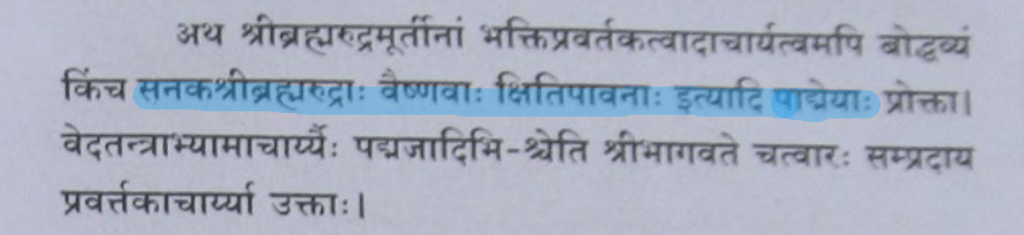
4. Śrī Nābhā Dāsa also mentioned a similar concept in his bhaktamāla [2] where he connects the four vyūhas of Viṣṇu with four Vaiṣṇava sampradāyas and a similar concept is also found in the bhaktamāla of Rāghav Dāsa of Dādupantha. [3]
5. This verse also finds its place in the work of Śrī Hariram Vyas (early 16th century) named as Nava-ratnam. [4]
6. Gadādhar Dwivedi (Vallabha Sampradaya) also mentions the concept of four sampradayas referring to Padma Purāṇa in his work Sampradāya Pradīpa –

7. Hamsadāsa (Nimbārka Sampradāya) also mentions about four Sampradāya in his work Nimbārka Prabhā –
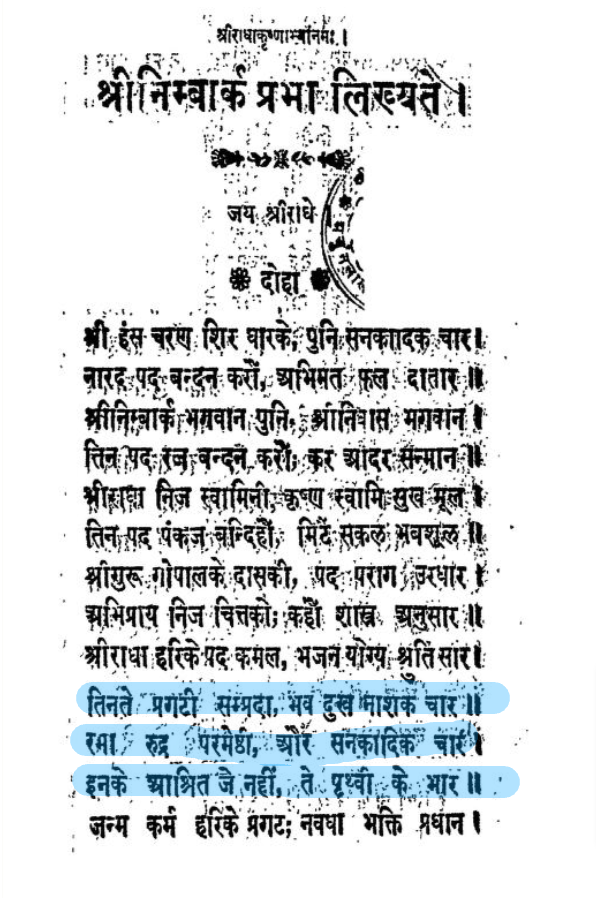
In this work, he clearly says that one who doesn’t belong to one of the four sampradayas is a burden on earth, hence his criticism of them.
8. Harihara Bhaṭṭa ( Viṣṇu swāmi sampradaya) also quotes verses of both Padma Purāṇa and Garg Samhitā in his Viṣṇu Swami Charitamritam (1743 AD) –
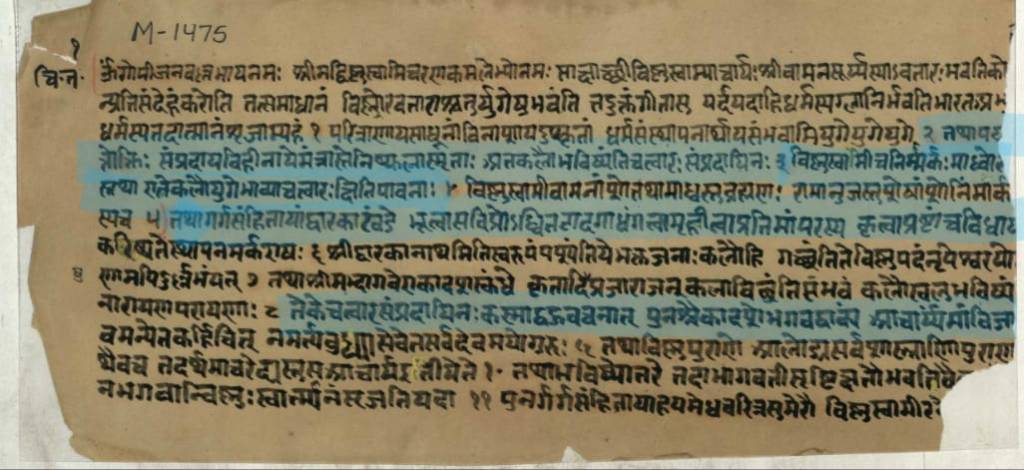
9. Anantdas (16th century) in his Pipa Parcai also mentions about Four Sampradayas. [5]
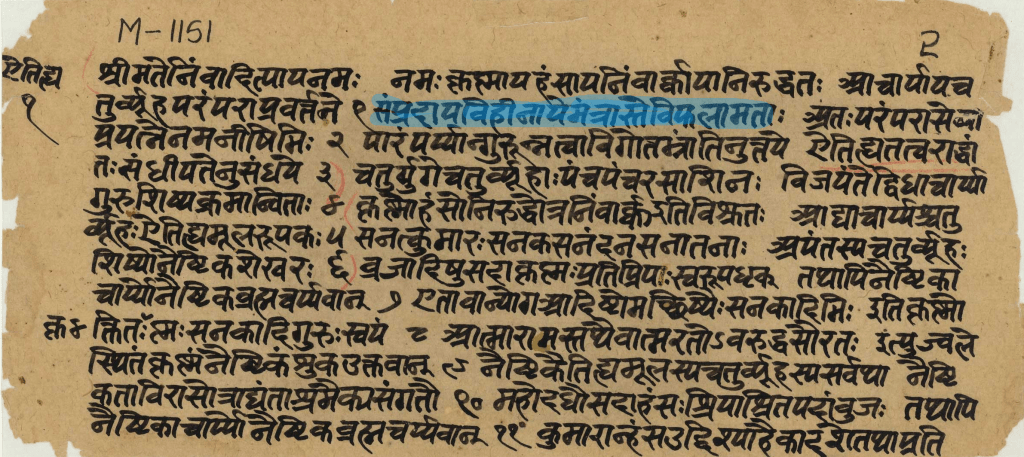
10. There is a text named Aitihytattvaradhantah attributed to Nimbadityah apparently belonging to Nimbārka Sampradāya also contains such a verse –
References by Gauḍīya Ācāryas
Now this verse is also found in the granthas of Gauḍīya Sampradāya to which the author belongs.
- Kavi Karṇapūra’s Gaura-gaṇoddeśa-dīpikā,[6] dated 1576 AD mentions this verse like this –
prādurbhūtāḥ kali-yuge catvāraḥ sāmpradāyikāḥ
śrī-brahma-rudra-sanakāhvayāḥ pādme yathā smṛtāḥ
ataḥ kalau bhaviṣyanti catvāraḥ sampradāyinaḥ
śrī-brahma-rudra-sanakā vaiṣṇavāḥ kṣiti-pāvanāḥ
Here only one of the two verses is quoted by Śrīla Kavi Karṇapūra referring that these verses are found in Padma Purāṇa.
2. Narahari Cakravartī (early 18th century) in his work Bhakti-ratnākara fifth wave, in the section dealing with Rāghava’s description of Lord Gaurāṅga’s pastimes to Śrīnivāsa also quotes both the verses like this –
tathā hi śrī-Padma-purāṇe
śrī-brahma-rudra-sanakā vaiṣṇavāḥ kṣiti-pāvanāḥ catvāras te kalau bhāvyāḥ sampradāya-pravartakāḥ sampradāya-vihīnā ye mantrās te niṣphalā matāḥ ataḥ kalau bhaviṣyanti catvāraḥ sampradāyinaḥ
3. Manohara dāsa (early 17th century) in his work Sampradāya-bodhinī also mentions these verses and in his other work Anurāgavallī, he doesn’t mention the verse but gives reference to the same verse like this –
śrī-gaurāṅga mahāprabhu vrajendra-nandana
guru karibāra tāṁra kena prayojana
yadi kaha īśvara karaye bhakti-rīta
loke ācari tāhā kariyā pratīta
ei hetu haya tabe kene asampradāya
guru karibena jagad-guru gorā-rāya
sanātana dharma prabhu karena sthāpane
padma-purāṇera vākya tāhā saba jāne
se khaṇḍita karibena bhakti ācaraṇe
bhāvite vismaya baḍa hailāṅ mane
Translation –
“Lord Caitanya Mahāprabhu is the son of Nanda Mahārāja Himself, so for what purpose would He accept a guru?
“If someone says that the Lord Himself takes the process of bhakti so that people may understand it, then why would Lord Gaurāṅga, the Guru of the whole world, accept a guru from outside a bona fide disciplic succession?
“The Lord acts in order to establish the sanātana-dharma. Everyone knows the statement of the Padma Purāṇa.
“Why would the Supreme Lord break the standard conduct of bhakti? Thinking about this, my mind became very perplexed.
4. In the Muralī-vilāsa, 21st Pariccheda, Rājavallabha Gosvāmī (17th century) quotes the same verses from the Gaura-gaṇoddeśa-dīpikā.
5. Viśvanātha Cakravartī in his work Gaura-gana-svarūpa-tattva-candrikā, also mention these verses in his work.
6. In the Nārāyaṇa-bhaṭṭa-caritāmṛta (3.33-47), Jānakīprasāda Bhaṭṭa also mentions about these verses.
7. Lāladāsa (early 18th century) wrote a Bhaktamāla in bengali language in which he states –
sampradāya-pramāṇa padma-purāṇe vidita
jagate prasiddha cāri sampradā udita
tathā hi pādme –
ataḥ kalau bhaviṣyanti catvāraḥ sampradāyinaḥ
śrī-brahma-rudra-sanakā vaiṣṇavāḥ kṣiti-pāvanāḥ, iti
8. Narayan Bhatt Goswami ( 16th century) in his work Sadhana Dipika also mentions about chatur sampradaya
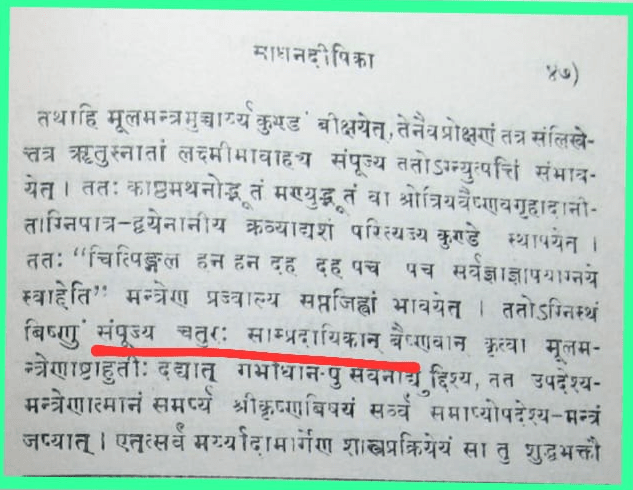
From all of these pramāṇas we can conclude that these verses were not at all wrongly ascribed or interpolated by Śrīpād Baladeva Vidyābhuśaṇa because we find these verses in works that predate Śrīpād Baladeva Vidyābhuśaṇa. So, the first argument raised by the objector doesn’t stand at all and stands refuted.
Second Argument
Now we will discuss the second argument raised by the objector. The objector has claimed that according to the author, Vaiṣṇavas who don’t come under four sampradāyas are not devotees of Bhagavāna, but this allegation is completely wrong. To refute the argument raised, we will analyze the meaning of the verse using the commentary Kānti-mālā, which is the earliest commentary on the text (prameya ratnāvali), and is considered the most authoritative.
sampradāya-vihīnā ye mantrās te viphalā matāḥ
ataḥ kalau bhaviṣyanti catvāraḥ sampradāyinah
śrī-brahma-rudra-sanakā vaiṣṇavāḥ kṣiti-pāvanāḥ
catvāras te kalau bhāvyā hy utkale purusottamāt
The basic translation of this verse is as follows –
The mantras received outside a sampradāya are considered fruitless. Therefore, in Kali-yuga there will be four founders of sampradāyas: Śrī, Brahmā, Rūdra, and Sanata Kumara. These Vaisnavas will be sanctifiers of the earth in the Age of Kali and will be sent from Jagannātha Puri in Odisha.
Now let us see what the commentator says on this verse –
prameyopadeśapathapravartakāścatvāraḥ prāgabhūvan। tebhyo gaṅgāpravāhavadapare pracāritāḥ। tadupadiṣṭena pathā vinā mantraśāstrādupalabdhā viṣṇumantrā muktidā na bhavantītyatna pādmavākyamāha- sampradāyeti। śiṣṭānuśiṣṭagurūpadiṣṭo mārgaḥ sampradāyaḥ। śiṣṭatvaṃ vedaprāmāṇyābhyupagantṛtvam। ataḥ sampradāyavihīnānāṃ viṣṇumantrāṇāṃ japtānāmapi vaiphalyāddhetoḥ kalau tadārambhe sampradāyinaḥ। te ke’bhūvan। tatnāha śrīti । puruṣottamāditi jagannāthāttatpreraṇāt tatkṣetrādityarthaḥ॥5॥
The commentator here says that “Formerly, there were four promulgators of the path, to instruct the objects of knowledge, and from them, others become manifest, just as the streams of the Gangā. Without the path taught by them, Viṣṇu-mantras obtained from treatises on mantra do not give liberation. This is spoken in the words of the Padma Purāṇa here. Sampradāya is the path instructed by a spiritual master who was taught by a learned preceptor. To be such a learned preceptor means to follow the authority of the Vedas. Although being chanted, Viṣṇu-mantras are not fruitful if devoid (vihina) of a sampradāya , and therefore (ataḥ) in the beginning of the Age of Kali (kalau), four (catvāraḥ) founders of sampradāyas (sampradāyinah) appeared. Who were they? The next line gives the answer. The word purusottamāt means “ sent by Lord Jagannātha from Jagannātha Puri”
Now commentator reveals the meanings of different words of the verse, which we will now analyze it one by one –
Sampradāya according to the commentator here means śiṣṭānuśiṣṭagurūpadiṣṭo mārgaḥ sampradāyaḥ which means that sampradāya is the path instructed by a spiritual master who was taught by a learned preceptor. Learned preceptor here means śiṣṭatvaṃ vedaprāmāṇyābhyupagantṛtvam one who follows the authority of Vedas which is commonly accepted in all schools of Hinduism. So, sampradāya is a lineage of preceptors who accept the authority of Vedas. So, basically this definition applies to all the schools of Hinduism.
Mantras in this verse refer to Viṣṇu mantras that are found in Vedas, Purāṇas and Vaiṣṇava Āgamas. As per our interpretation, Viṣṇu mantras refer to the mantras of Viṣṇu and his avatars and his retinue also.
Fruits of the mantras refers to mukti, which is common to all Viṣṇu mantras as all of them are capable of giving mukti.
The analysis of the verse is that since Viṣṇu mantras that are not received from a lineage are fruitless, so, Bhagavāna Puruśottama who resides in Puri, Odisha manifested four different lineages. This is an established truth in scriptures that one should receive knowledge from a guru and not otherwise so this verse only echoes that fact. Here in the verse, it talks about the lineages of Viṣṇu mantras that are mentioned in agamas etc should be received from established lineages. But this verse or its interpretation doesn’t negate that one can receive a mantra from another divine arrangement. For example, Shyamānanda Prabhu who himself received a mantra from Lalitā Sakhi doesn’t make this mantra invalid or fruitless as there is no prohibition of any such kind in the verse and secondly it also fits in the verse that Lakṣmi there can mean Lalitā Sakhi as all gopis are Lakṣmi as per Gaudiya Vaishnav theology are also and the mantra that he received is not part of any scripture and the above rule is only applicable to mantras found in Vedic Scriptures. So, here we can conclude that this verse talks about some famous lineages of Viṣṇu mantras but also allows other lineages of mantras. For eg, Lakṣmi can refer to all sorts of consorts of Bhagavāna and in similar fashion the verse can be interpreted. Hence, this verse should not be rejected by virtuous Vaiṣṇavas.
Context of the verse
We need to also examine the context in which this verse is quoted. Only then we can understand the right intent of the author. So, previous to this verse the author says this –
bhavati vicintyā viduṣāṃ niravakarā guruparamparā nityam। ekāntitvaṃ sidhyati yayodayati yena haritoṣaḥ
The author says that one should always meditate on his guru paramparā through which one receives exclusive devotion and through this Lord Hari becomes pleased. [7]
So the author here recommends that one should meditate on his guru and previous acharyas, as this is part of the practices of devotion. Now for meditating on one’s guru lineage, it is required to get the knowledge about that. The author belongs to the lineage belonging to Lord Brahma and to glorify his lineage he quotes this verse of Padma Purāṇa and after this verse, he gives details about his lineage. So, the primary intention of the quotation is the glorification of his own lineage by quoting an established scripture that is even glorified in such an authentic scripture and then reveals his lineage. There is no statement by the author that there cannot be any sampradāya other than four etc. no such statement is found. We should note here that there is the absence of a prohibitory sentence in the main text regarding four sampradāya. As per mimāmsa and nyāya śāstras, absence of prohibition is considered as permission. So, the allegation raised by the objector doesn’t stand at all. In fact, as per the author’s philosophy, any jīva has the adhikāra to perform Viṣṇu bhakti, as by nature everyone is a servant of Viṣṇu which is established in the text itself.
Historical Background
Since the author lived in 18th century and during that time, due to objections raised by some religious heads, who considered these verses as authentic, because this concept had gained popularity in the works of previous famous saints in North India as mentioned above and due to this, there was an environment among the religious circles that one should ascribe to one of the four sampradāyas mentioned in these verses. In that context, the author highlighted the belief that the mantra connection of the sampradāya is with Brahma sampradya and it was passed down to him through paramparā. Nowhere does he say that only four sampradāyas are authentic. We don’t find any such sentences in any of his works. In fact, in the early 18th century, Bālānanda Svāmī from the Rāmānandi-sampradāya created the cāra sampradāya akhāḍā (Assembly of the Four Sampradāyas) with branches in several cities. Having a large number of members, they soon attained considerable political influence and firmly established a sort of religious monopoly. G. N. Bahura remarks this fact by quoting the following verse: [8]
sampradāyā hi catvāraḥ pañcamo naiva vidyate
pādmokta-vacanenaiva nirṇītaṁ paṇḍitaiḥ kila
Translation
“There are only four sampradāyas and not a fifth one. This was factually ascertained by learned scholars on the basis of the statements of the Padma Purāṇa.”
But we don’t find such prohibition of a fifth sampradaya in Gauḍīya Vaiṣṇava works, hence we don’t take such a statement very seriously.
So, there might be some historical environment due to which the author highlighted the already popular belief regarding this matter.
Conclusion
Hence, both the arguments raised by the objector are intangible and baseless. We have seen how these verses find their places in the works of previous authors and it is not possible to interpolate all such different works and how the author’s only intention is to highlight his own lineage in the light of Vedic scriptures but at the same time doesn’t have any issue with other lineages and this verse has multiple meanings as well. Gauḍīya Vaiṣṇava Tradition doesn’t have any issue with the authenticity of any sampradāya. According to it, anyone has the adhikāra to do Viṣṇu bhakti. As per us, even Canḍidāsa, Vidyāpati, etc whose lineage is not defined are also pure devotees of Bhagavan [9]. Anyone can do bhakti who has received the association of devotees of Bhagavān.
Notes
[1] śrīman-madhva-mate hariḥ paratamaḥ satyaṁ jagat tattvato
bhedo jīva-gaṇā harer anucarā nīcocca-bhāvaṁ gatāḥ|
muktir naija-sukhānubhūtir amalā bhaktiś ca tat-sādhanam
akṣādi-tritayaṁ pramāṇam akhilāmnāyaika-vedyo hariḥ
[2] caubīsa prathama hari bapu dhare, tyoṁ catur-vyūha kali-yuga pragaṭa śrī rāmānuja udāra, sudhā-nidhi, avani kalpa-taru viṣṇu svāmi bohittha sindhu-saṁsāra pārakaru madhvācāraja megha bhakti sara ūsāra bhariyā nimbāditya āditya kuhara ajñāna ju hariyā janama karama bhāgavata dharma sampradāya thāpī aghaṭa
[3] A Storm of Songs by John S Hawley, pg 127
[4] tad uktaṁ pādme – sampradāya-vihīnā ye mantrās te viphalā matāḥ ataḥ kalau bhaviṣyanti catvāraḥ sampradāyinaḥ śrī-brahma-rudra-sanakā vaiṣṇavāḥ kṣiti-pāvanāḥ rāmānujaṁ śrīḥ svīcakre madhvācāryaṁ caturmukhaḥ śrī-viṣṇu-svāminaṁ rudro nimbādityaṁ catuḥsanaḥ
[5] Pīpā parcai 35.25 in W.M. Callewaert and S. Sharma, The Hagiographies of Anantadas: The Bhakti Poets of North India, Richmond: Curzon, 2000, p. 276
[6] Much of the research here draws upon the works of Dr. Demian Martins, also known as Dr. Baladeva Das.
[7] Discussed in anuccheda 286 of Bhakti Sandarbha. Meditating on the guru is a necessary part of Mantra Upasana.
[8] Literary Heritage of the Rulers of Amber and Jaipur, page 66. This seems to be a popular verse of unknown source.
[9] Viśvanātha Cakravartī Ṭhākur in his gloss to Prema Bhakti Candrikā of Narottama Dāsa Ṭhākura accepts Jayadeva, Canḍidās, Vidyāpati, and Bilvamangala as Vaiṣṇavās who were practising the same bhakti that Mahāprabhu himself came to give.
 Chaitanya Siddhanta Parishad